

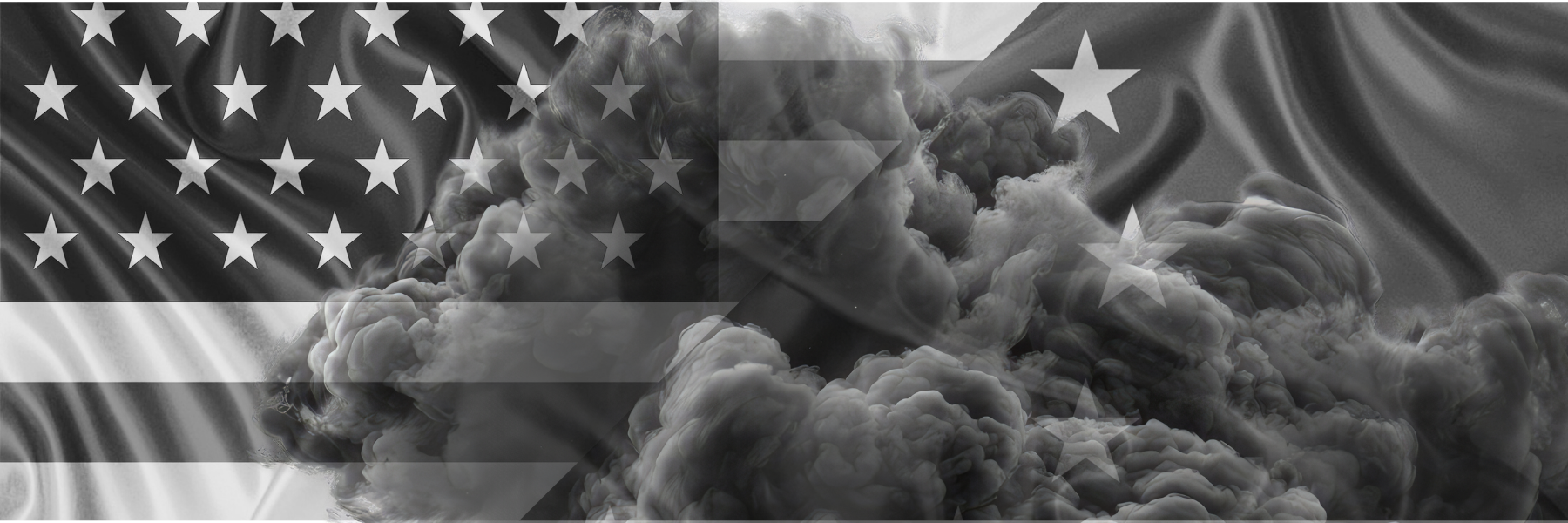
We are following with great concern and growing outrage the current plans to implement the trade deal between the European Union and Trump administration. Firstly, EU institutions now plan to approve the tariff arrangements with the United States – without binding enforceable environmental and social standards.
Further steps are to follow. Yet the EU’s concessions risk becoming a historic mistake—for the climate, for the energy transition, for democratic processes, and for Europe’s strategic autonomy.
The EU should not agree to a deal that is being concluded against the backdrop of a trade war and blackmail.
Instead, we must now focus on creating a Europe, that democratically shapes its energy supply, digital infrastructures, food systems, and social security. European trade policy must be subordinated to these objectives while also taking responsibility for global climate action and the protection of human rights.
Particularly alarming are those elements of the agreement in which the EU commits to purchasing vast quantities of fossil energy from the United States. Over a three-year period, it is expected to import fossil energy worth USD 750 billion, including fracked gas, crude oil, and nuclear technologies.
Such a deal would lock Europe into fossil energy for years to come and slow down the urgently needed energy transition. Massive investments in LNG imports and infrastructure create long-term commitments and so-called “lock-in effects” that delay the expansion of renewable energy, increase dependency, and drive up energy prices.
It is clear: Europe’s future does not lie in new fossil imports, but in the rapid expansion of renewable energy, energy efficiency, and a resilient, climate-neutral economy.
New dependencies on an unreliable partner
The planned deal also risks pushing Europe into renewed energy dependence—this time on the United States. Already today, a large share of LNG imports in European countries comes from the US. Further increasing these imports would make Europe dangerously vulnerable. The lessons from fossil dependence on Russia should serve as a clear warning.
Equally problematic are the multi-billion-euro investments in the United States to which the EU has committed. Their goals and priorities are to be determined solely by the Trump administration. This creates a high risk of climate-damaging misallocations, for example in oil pipelines, small modular reactors (SMRs), or additional LNG terminals.
Defending European Standards and Sovereignty
The EU–US trade deal also threatens Europe’s standards and democratic policy space. For example, the EU is expected to not restrict US Big-Tech companies. Progressive regulations such as CSDDD are set to be undermined, safety standards in the automotive sector are to be relaxed, and food standards are to be lowered – all in favour of US corporations. The EU rules to cut methane emissions are also currently under fire from the U.S. government, as it could jeopardize U.S. LNG exports to Europe.
These commitments place significant pressure on European environmental and digital standards as well as consumer protection. To uphold them, the EU must defend its political sovereignty.
Defending democracy
he lack of democratic legitimacy is the central problem for the ongoing negotiations. Unlike with other trade agreements, the European Commission does not negotiate based on a mandate issued by member states.
Neither objectives, red lines nor social and environmental safeguards were defined in advance. Negotiations with such far-reaching consequences for climate, the economy, and society require a prior democratic mandate. The European Parliament has also not been involved in negotiating the trade deal between Commission President von der Leyen and Donald Trump.
Europe must not be coerced
Europe’s economic and political strength is based on cooperation, the rule of law, and democratic processes. A deal concluded under coercion would undermine these principles.
We therefore call for:
- A democratically legitimated mandate for negotiations with the United States
- No fossil rollback in the interests of the Trump administration. No commitments to massive imports of fracked gas or other non-renewable energy sources.
- The protection of European climate, environmental, digital, and consumer standards.
- Advancing the development of a resilient Europe that democratically shapes its energy supply, digital infrastructure, food system, and social security.
- A rapid acceleration of renewable energy deployment, consistent progress in energy efficiency, and the safeguarding of democratic standards and transparent decision-making processes.
Signatories
Forum Umwelt und Entwicklung
Netzwerk gerechter Welthandel
Konstanzer Bündnis für gerechten Welthandel
Gemeinwohlökonomie
Andy Gheorghiu Consulting
Anders Handeln Österreich
Attac Österreich
For a Better Bayou
Corpus Christi DSA
Friends of the Earth Europe
Grüne Bildungswerkstatt NÖ
Berliner Wassertisch
Mannheimer Bündnis für gerechten Welthandel
Attac Deutschland
TROCA – Plataforma por um Comércio Internacional Justo
Deutsche Umwelthilfe (DUH)
BI Kein CO2 Endlager e.V.
Slow Food Deutschland
Fairwatch Italy
ÖBV – Via Campesina Austria
Hawkmoth
Umweltinstitut München
Clean Air Action Group (Hungary)
CGT (Spain)
EJAtlas.org (Spain)
Ecological Manifesto – ManEco (Bulgaria)
Leave it in the Ground Initiative (LINGO)
350.org
Attac Aalen
Not Here Not Anywhere (Ireland)
attac freiburg
Centre for Transport and Energy
PowerShift
Ortenauer Bündnis für gerechten Welthandel
Entrepueblos-Entrepobles-EntrepobosHerriarte
Ecologistas en Acción
Zukunftsrat Hamburg
Attac España
Mannheimer Bündnis gerechter Welthandel
Razom We Stand
Better Brazoria
Campagna Per il Clima Fuori dal Fossile
Movimento No TAP Brindisi
Forum Ambientalista
Emergenza Climatica
Futureproof Clare
Attac France
Die Bürokratiemonster
Climáximo
European Trade Justice Coalition
Bond Beter Leefmilieu
Love Leitrim
We think you’d also like:
Gas
Stopping climate breakdown means keeping all fossil fuels in the ground – including gas. Governments and banks must stop financing gas pipelines and terminals which would lock us into a fossil-fuel future.