
Written by Lindsey Wuisan, resource justice and new economies campaigner
While devastating fires are devouring forests across Europe, Bosnia & Herzegovina (BiH) feels like a green refuge. Although the country is also suffering from heat waves, its pristine forests – which cover 47% of the country – and crystal-clear rivers are a vital lifeline in times of climate crisis.
Yet they are under threat as companies are scouring BiH’s mountains in search for minerals.
During a study tour in July, organised by the Heinrich Böll Stiftung, I visited five mining locations (Kupres, Jezero, Ozren, Majevica and Vareš) during three days, listening to the testimonies of several people affected by mining projects in the making. Contrary to the image spread by mining companies, they are not crazy eco-terrorists impeding progress with a stubborn NIMBY (“not in my backyard”) attitude. They are people with different backgrounds, who undertake investigations to back up their claims. They are engaged citizens who turned into environmental defenders because their governments are failing to protect the public interest.
Here, I want to tell three of these true stories to show the reality of extractivism – the economic model focused on appropriating natural resources with minimal processing, primarily for export – and the challenges that land defenders face in BiH.
Majevica: Jeopardising nature and drinking water
At a stunning viewpoint overseeing the green hills of Majevica, I met Snežana Jagodić Vujić who coordinates the environmental association Eko put from Bijeljina, in the northeast of BiH. Majevica is a mountain range and nature area that acts as a recreational refuge for city dwellers. Already since 2008, in spatial plans drawn up by the municipality and region, Majevica was intended to become a nature reserve, but this status is now under threat by a mining project.
In 2020, the Swiss mining company Arcore began “geological surveys” for lithium in Majevica, finishing in 2023. (A geological survey is basically exploratory drilling in the Earth’s subsurface to analyse mineral deposits, often emitting dangerous dust and affecting groundwater.) People who lived near the drilling found that their water source and trees had dried up, and a water analysis in one village detected heavy metals. Instead of informing residents of the company’s plans, they had to find out through foreign media.
For several years now, Snežana has been campaigning for environmental protection and citizen participation in decision-making processes. She has organised numerous actions, together with other grassroots organisations from the region, such as Čuvari Majevice (Guardians of Majevica) and Karton Revolucija. End of 2024, they organised a petition “Majevica – Nature Park, Not a Lithium Mine”, calling for a moratorium on minerals exploration. The petition gathered 6,057 signatures in four municipalities and was submitted to the National Assembly, where it was rejected on unclear grounds. In the meantime, the grassroots mobilisation continues.
There are several municipalities that will be impacted by the mine operations: Lopare, Ugljevik, Bijeljina, Zvornik, Čelići, Tuzla, Teočak and Brčko. In September 2024, the mayors of these municipalities signed a public letter declaring that a lithium mine in Majevica would cause irreparable damage to people and the environment, and that tourism and mining do not go together.
But the corporate push for lithium extraction continues. In 2025, Arcore applied for a concession for an open-pit lithium mine in Majevica, without a completed economic report or any environmental study. A decision by the authorities at entity level is still pending.
Ozren mountains: Threatening cultural heritage and livelihoods
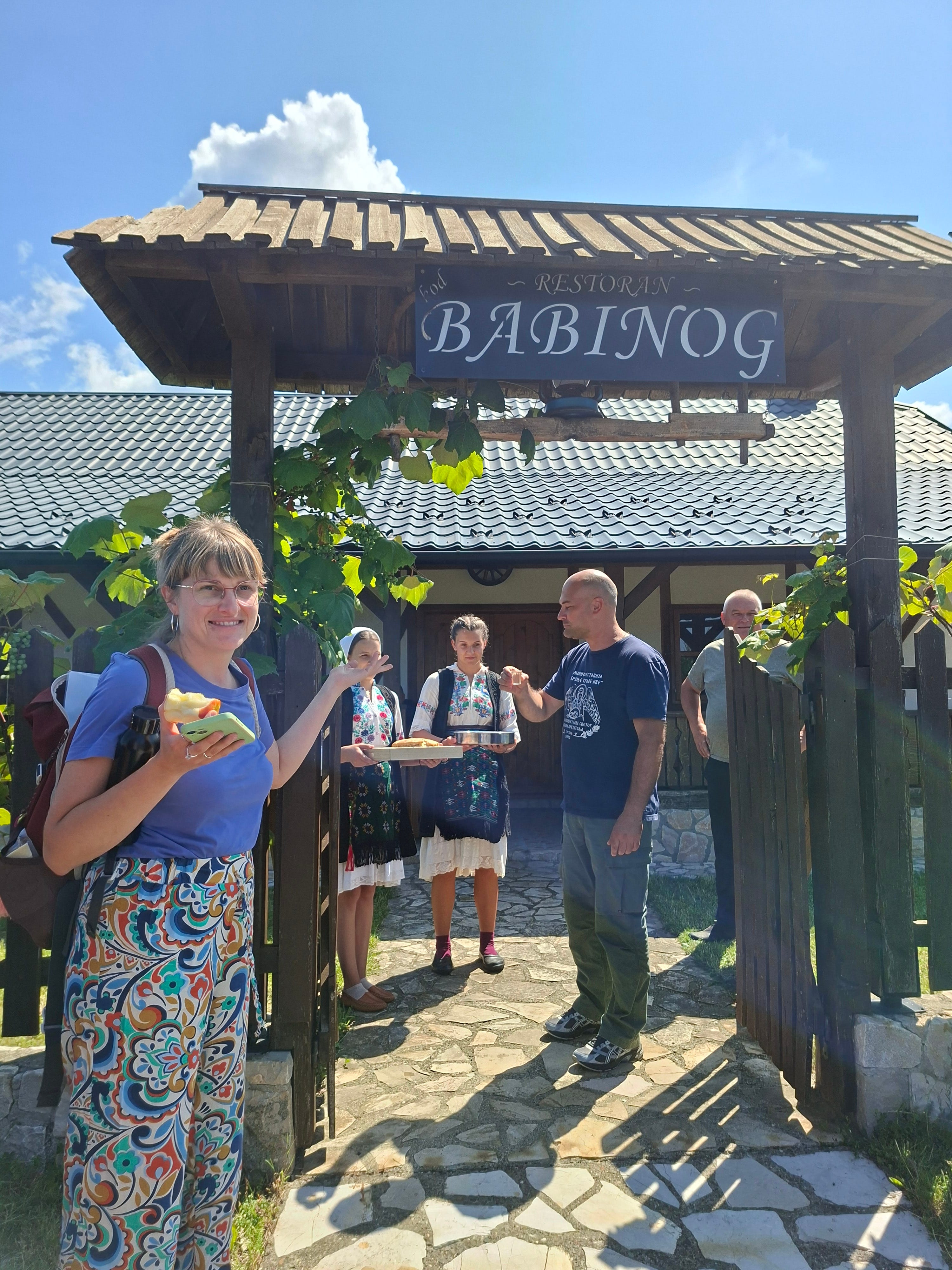
In the Ozren mountains, we were received with generous hospitality by several members of the local community and the grassroots organisation Ozrenski Studenac. They explained that the region is characterised by a strong cultural identity and people’s livelihoods depend on the fertile soils for farming and nature for ecotourism. A part of Ozren is already designated as a national park in the spatial plan of the region.
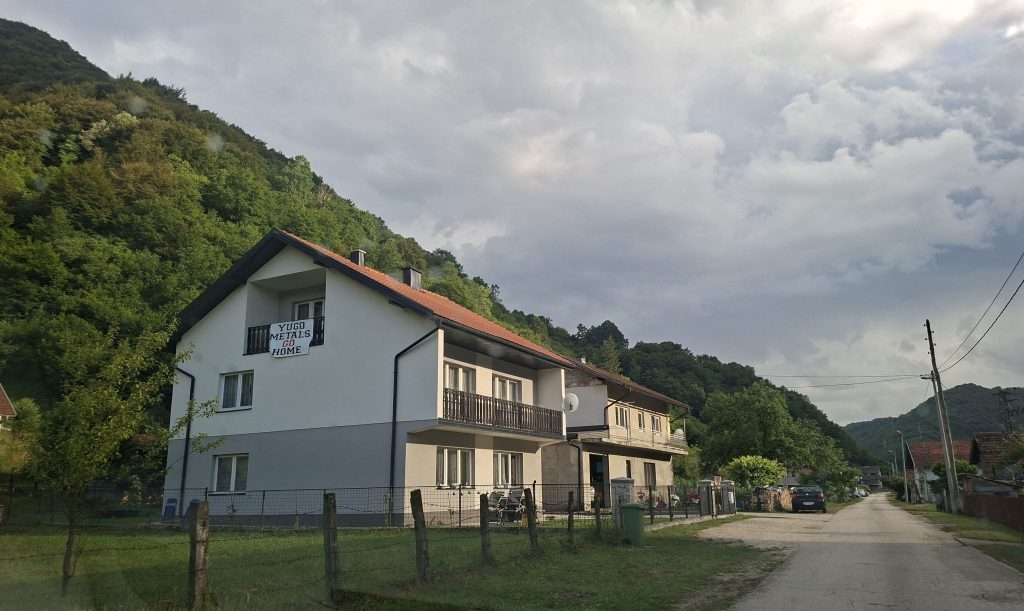
Geological surveys for nickel and cobalt began in 2021 by Medeni Brijec (Yugo Metals Ltd, formerly the Australian company Lykos Metals Ltd) without the consent or knowledge of the local community. When they found out, local citizens started mobilising through letters, press reports, public protests and legal complaints. Two activists stand out for their long-term commitment: Zoran Poljašević, an environmental engineer who suffered unjust repercussions for his activism, and Davor Šupuković from the association UGF, specialised in participatory research on biodiversity.
In 2023, the Ministry of Energy and Mining granted permission to explore in the area of Doboj. Surprisingly, in May 2025, the City Assembly of Doboj declared Ozren a “protected area,” allowing only “sustainable use” of natural resources. Although not the strictest level of environmental protection, this decision appears favourable for the future of the Ozren mountains. Nevertheless, the permit for geological survey has not yet been annulled, meaning that the company may still proceed.
Vareš: Poisoning instead of prosperity
One of the most controversial mining projects in BiH is the Rupice mine in Vareš, because of the damage already happening on the ground. I met several representatives of the grassroots NGOs Vareška Inicijativa and Opstanak (see picture below), who have been scrutinising the impacts by the mining operations. Since many locals cultivate fruits and vegetables near the mine, they fear that the dust emissions may contaminate the products they consume.
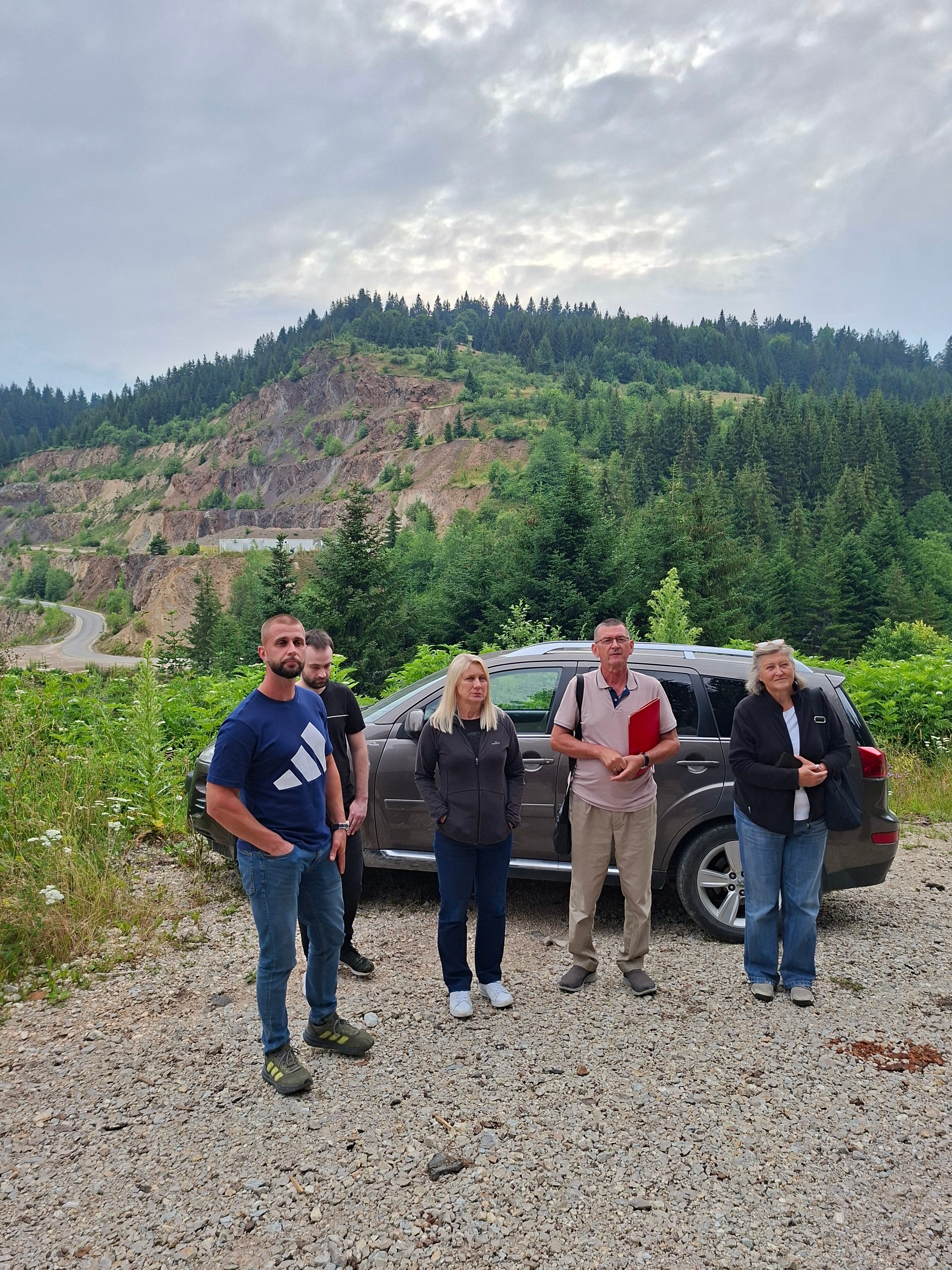
The mine was opened in 2024 by the UK-based Adriatic Metals to extract first gold and silver, then zinc, lead and other minerals, with the promise to create jobs and prosperity. In September 2025, the mine was taken over by the Canadian company Dundee Precious Metals (DPM). For years, trucks have passed through the city of Vareš on a daily basis, transporting tons of mining waste, spreading a fine grey dust through the air.
Mining companies always promise jobs, economic growth and development. That is what people were hoping for when Adriatic Metals came to Vareš, but now the mining project divides the population. According to the locals I spoke to, the negative social, health and environmental costs outweigh the benefits. Nevertheless, the +/- 500 jobs that DPM sustains are valuable in a region that is plagued by a lack of opportunities. But, are they long-term, sustainable jobs? BiH does not have a significant processing and manufacturing industry, so the minerals end up in international supply chains for industries abroad. In other words, most jobs are created elsewhere.
Since 2023, Adriatic Metals has faced a series of legal complaints over river pollution, illegal mining-waste dumping and inaccurate environmental information. A defamation case brought by the company against a complainant was dismissed, while a court later annulled one of its mining permits over inadequate assessment of water-pollution risks; although a new permit was subsequently issued, legal action against it is ongoing. In 2025, the company was also fined approximately €7,500 for illegally cutting down hundreds of trees.
Earlier this year, blood tests revealed exposure to lead in more than 300 residents living near the mine, some at elevated levels which can damage the nervous system. This has led to public outcry, with grassroots NGOs demanding availability of free testing to all citizens, continuous health monitoring and other protective measures. So far, the Ministry has only responded by establishing an “expert group” to analyse the situation in more detail.
In May 2026, four Bosnian environmental associations filed criminal charges against DPM. Charges were also filed against cantonal and regional government ministers, because of their failure to protect public health. The charges are still being reviewed. If accepted, the case might go to court.
When policies fail, activists have to take over
Many of the locals I spoke to deplore a lack of support and transparency on the side of public authorities – whether it concerns the monitoring of water quality by inspection agencies or granting of permits. In a few cases, the local authorities do recognise the concerns of their citizens (for instance the mayors of Kupres, Lopare and the city council of Tuzla), but in general, citizens feel abandoned by their politicians. Especially the authorities at regional and federal level, who tend to side with corporate interests. To illustrate, the Parliament of Republika Sprska recently changed the law on geological exploration in favour of investors, allowing prospecting without consent of the local communities or even a municipality’s mayor. Furthermore, the amount of material that can be extracted has increased significantly to quantities almost comparable to those obtained during actual exploitation.
A recent publication by Majda Ibrakovic contains a more in-depth analysis of the policy framework for mining in BiH, which is outdated and fragmented. There is also a structural lack of enforcement and inadequate rule of law (not to mention many indications of corruption). When Adriatic Metals illegally felled trees on state-owned land, the federal government of BiH did not sanction it – on the contrary, it allowed the construction of mining infrastructure. A decision that was annulled by the Constitutional Court in 2024.
All of this leads to high levels of distrust among the population, and when public authorities do not fulfill their responsibilities, grassroots activists are forced to take over their role to scrutinise mining companies.
Towards a just transition
Not only in Majevica, Ozren and Vareš, but also in Kupres and Jezero, local communities face the same obstacles and injustices:
- Lack of transparency and meaningful public engagement
- Lack of adequate environmental impact assessments or safeguards to prevent environmental harm, particularly to water resources
- Lack of measures to prevent negative impacts on livelihoods and public health
- Irregularities during permitting processes and concession agreements
- Social engineering, misinformation through media control and intimidation (e.g. SLAPP cases)
As a result, there is lack of trust and support among local communities for the mining projects in question. They are demanding a just transition built on strong governance and respect for environmental and social rights. When companies and governments ignore those calls, mining operations will only incite community unrest, legal complaints, negative media exposure and civil disobedience.
Despite the challenges and setbacks, there are also victories. In 2025, Friends of the Earth Bosnia and Herzegovina (Centar za životnu sredinu, CZZS), and Dolina Plive successfully challenged the decision of the Ministry of Energy and Mining of RS to grant the investor SNK Metali an extension of the exploration period. The court also issued a favourable ruling concerning access to information, forcing the company to provide more transparency.
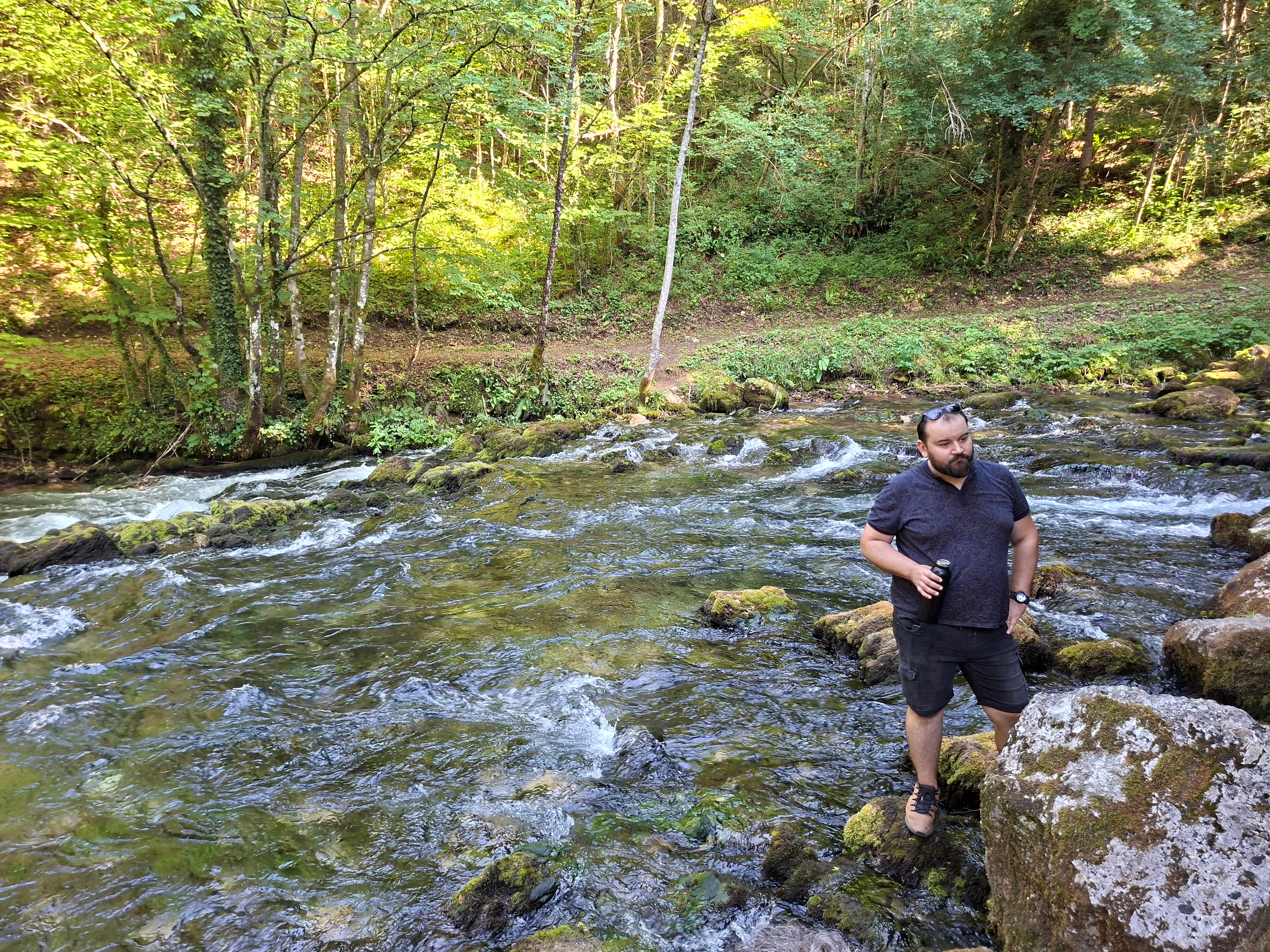
The people in this article and many others – like Majda Ibrakovic (Eko Forum Zenica) and Vladimir Topic (CZZS), who guided us during the study tour – are true land defenders, protecting communities and nature once torn apart by war. While mining companies sow division, the strength of the environmental movement is its collaborative network and solidarity. As forests and rivers cross borders, the unifying effect of a common cause bridges the ethnic divides between Serbs, Bosniaks and Croats.
Land defenders are dedicated to protecting the public interest and democracy that is being eroded by corporate greed. It is essential that the European Commission supports their vision for sustainable development, rather than looking away for the sake of securing mineral supplies.
For further information, here’s a handy overview of all planned and active mines by Center for Environment (CZZS).
This blog article by Lindsey Wuisan, our resource justice and new economies campaigner, was originally published on our Substack. All photos by the author.