

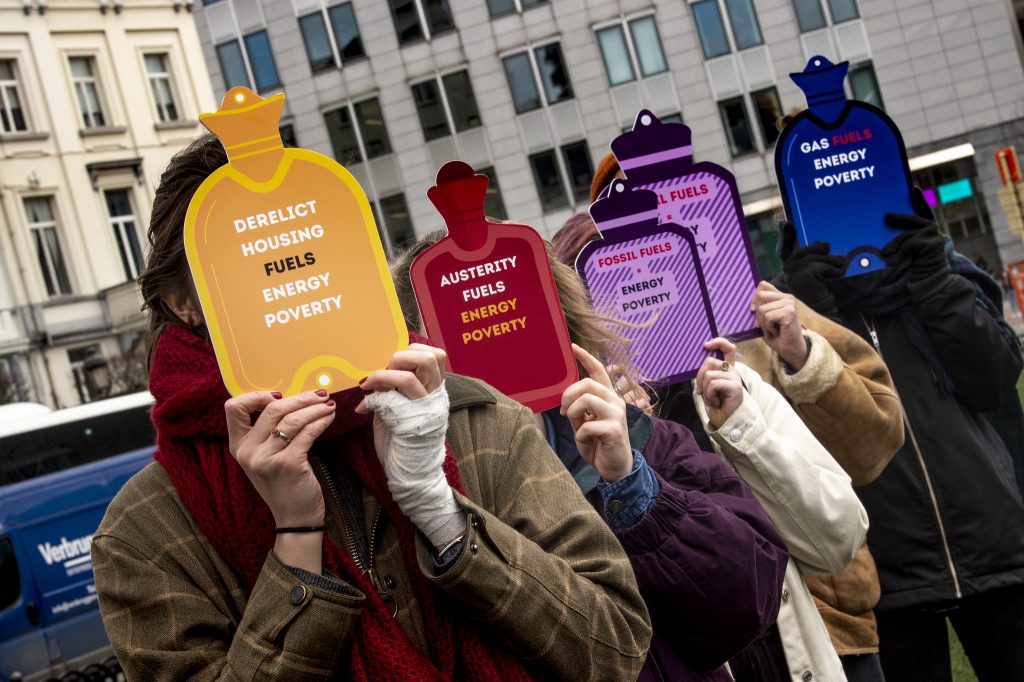
In 2025, the Right to Energy Coalition undertook an internal strategic revision in response to a rapidly changing political and policy context at EU and national level. The shift towards deregulation and the growing influence of fossil fuel interests are creating new risks for households and communities already struggling with high energy costs and insecurity.
The Coalition is key to delivering on our objective to end energy poverty by bringing together social justice NGOs, trade unions, grassroots organisations, social housing providers and other actors behind common, people-centred solutions. This work complements Friends of the Earth Europe’s wider campaigning on energy poverty and the right to energy, including protections for energy-poor households and a rapid, fair transition away from fossil fuels.
As part of this strategic reset, Coalition members jointly decided not to hold the originally planned Right to Energy Forum in 2025. Instead, we prioritised two complementary tracks: continued internal Coalition meetings to develop an updated strategy, and strengthened collaboration with the Beyond Gas movement to build shared capacity and coordination at a critical moment.
Why the Beyond Gas Conference mattered
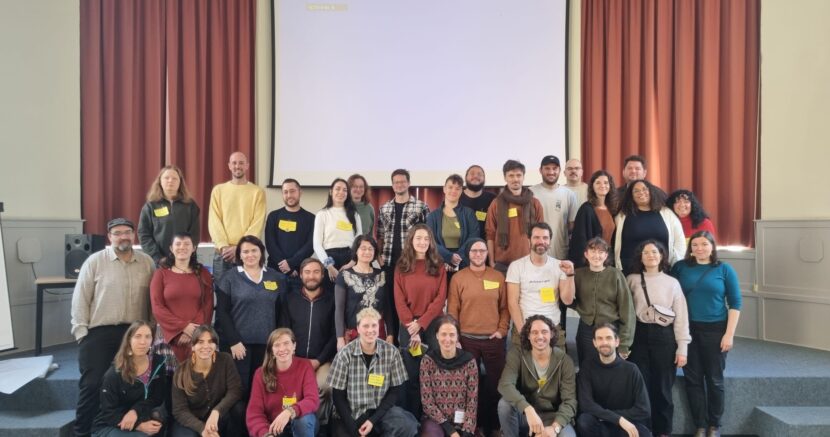
In the last week of November, Friends of the Earth Europe co-hosted the Beyond Gas Conference 2025 in Brussels together with Food & Water Action Europe and Fossil Free Politics. The two-day meeting brought together around 50 activists, researchers, environmentalists and campaigners from across Europe and beyond to assess the renewed push for fossil gas and to strengthen cross-border coordination.
Discussions mapped how gas dependency is evolving in different regions and how political shifts in 2024-2025 are weakening climate ambition and narrowing civic space. Participants examined fossil fuel lobbying and national-level deregulation trends, shared best practices for safeguarding previous policy wins, and explored how fossil gas is being repackaged through false solutions such as ‘certified’ gas initiatives, hydrogen blending proposals, petrochemical expansion and carbon capture and storage. A dedicated session on private finance highlighted how banks and insurers enable new gas infrastructure – and how coordinated pressure can slow projects, trigger funding withdrawals or block approvals.
For the Right to Energy Coalition, the conference reinforced a shared analysis: expanding fossil gas infrastructure locks households into volatility and high costs, while delaying the structural solutions people need – energy savings, renovation, and renewables for all. Strengthening cooperation between energy justice and anti-gas campaigners is therefore essential to protect people’s rights while accelerating the phase-out of fossil fuels.
What happens next
The insights and connections built in Brussels will feed into the Coalition’s updated strategy and workplan. In the months ahead, we will continue strengthening alliances, sharpening our shared narrative on affordability and fossil lock-in, and identifying concrete opportunities for joint advocacy and campaigning that advance a right to energy and an end to energy poverty across Europe.
Reference: Food & Water Action Europe event write-up.

We think you’d also like:
Gas
Stopping climate breakdown means keeping all fossil fuels in the ground – including gas. Governments and banks must stop financing gas pipelines and terminals which would lock us into a fossil-fuel future.