
In recent years, we have witnessed the dark side of the so-called “green transition” and the ensuing race for raw materials for electric vehicles, solar panels, but also electronics and military equipment: Frantic mining exploration in protected areas without respecting the local communities’ needs and opinions. In the framework of its Critical Raw Materials Act (CRMA), the European Commission published a whole list of “Strategic Projects” – most of them prime examples of this worrying trend.
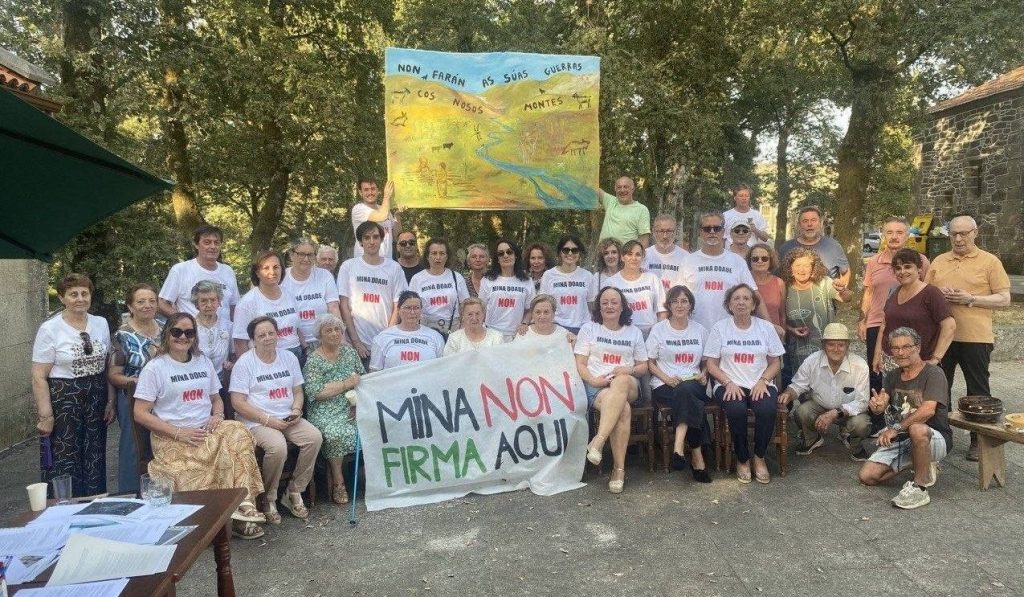
One of the Strategic projects – which can, as per that label, be fast-tracked and easily funded – is Mina Doade in Galicia, Spain. Local communities and groups have been flagging serious concerns over water resources, biodiversity and public participation since 2020. The project had already been cancelled by the Galician government in 2020, due to a lack of environmental assessments and other irregularities. We talked to an activist on the ground, named here as Palmira Bra Troitiño because of the very real threat of individual repression.
“So-called ‘green mining’ does not exist”, they tell us. “What does exist is the elimination of our natural and cultural heritage. What exists is the pollution of our water – the water we drink, the water we bathe in, and the water that irrigates and gives life. What exists is the destruction of agriculture, livelihoods, and our future. The company has no permit from us to build its lithium mine on our ground.”
This case and similar ones recently led to a fervent controversy between the European Parliament and Commission.
Outraged communities – and MEPs
In March 2025, the EU’s Critical Raw Materials Board (which is composed of European Commission and member states officials) added eleven projects to the 2025 Strategic Projects list, despite these projects failing even the Commission’s own expert assessments just two weeks earlier.
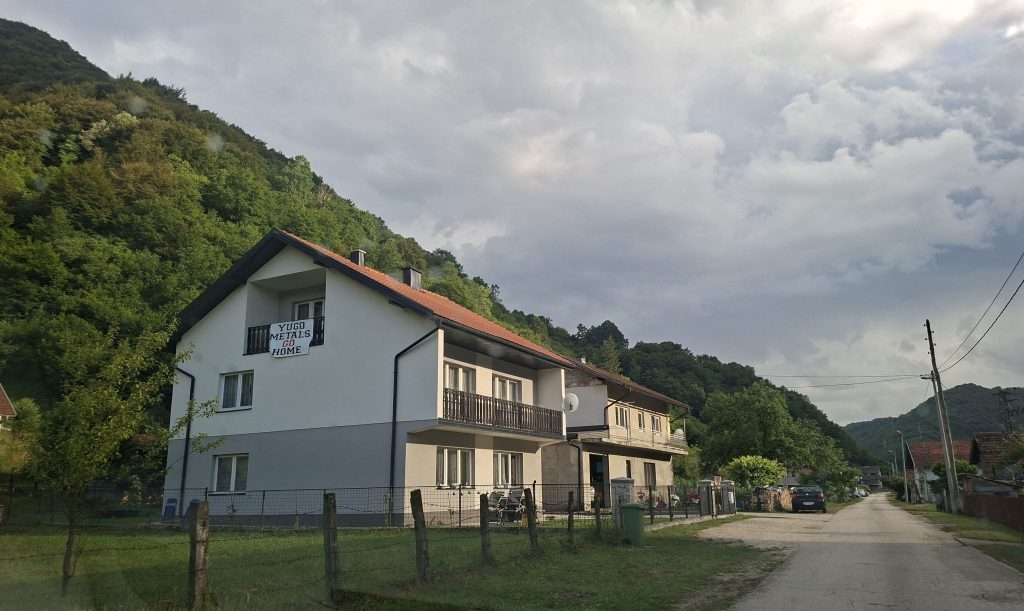
Among these projects were several controversial projects, including the Covas do Barroso project in Portugal, Mina Doade, Cobre las Cruces and Las Navas in Spain and the Rio Tinto lithium project in Jadar, Serbia. Several of the projects are subject to ongoing legal proceedings, including before the General Court of the European Union.
The final selection of projects was a decision made after DG GROW (the EU department overseeing industrial strategy) met with member states behind closed doors. And it raises serious questions: were projects selected based on public interest and sustainability criteria, or on political pressure? Local communities affected by the eleven projects are outraged – and so are MEPs Ana Miranda (from Galicia) and Catarina Martins (from Portugal).
The two MEPs sent a critical letter to the European Commission demanding full transparency. They’re calling on DG GROW (the EU department overseeing industrial strategy) to “publish the relevant assessment methodology, correspondence and procedural safeguards relating to the re-evaluation process and to clarify whether the current framework sufficiently protects against undue political influence in future Strategic Project selections”. In the meantime, Friends of the Earth Spain/Amigas de la Tierra also demanded the Spanish Ministry to clarify irregularities in the selection of these projects.
Deals behind closed doors
In Galicia, Portugal and elsewhere, communities are already contesting mining projects that threaten their water, air, and livelihoods. As MEPs Miranda and Martins flagged: right now, the process of selecting “Strategic projects” is opaque. Sustainability assessments are hidden, environmental data is withheld, and decision rationales are not disclosed under the pretext of business-sensitive information and “security” reasons.
In 2025, MEP Ana Miranda already submitted written questions to the European Commission about possible conflicts of interest. One of the Commission experts who assessed the 47 strategic projects was the director of the SAMCA Group, which promoted the project in Doade. He is now director of mining at Recursos de Galicia (RDG), the public-private company that manages the mine’s operations. These facts were also investigated by the newspaper El Salto Diario.
Now with the recent revelation, Palmira Bra Troitiño from Doade added:
“Our first demand is to know who is responsible for the inclusion of the Doade project on the final list, despite negative expert assessments. European strategic projects are financed with public money, we and all European citizens have the right to know how the decision was taken and who took it. Most importantly, besides immediate explanations, we want direct access to all documents and we want to hold decision-makers accountable.”
Justice for all communities threatened by mining
Activists fighting against mining in communities around the globe are united in solidarity and outrage.
Palmira Bra Troitiño says:
“We are also very worried about the new round of Strategic Projects, as the Touro mine and the San Juan mine from Galicia applied for designation. We think it is possible that they get selected the same undemocratic way like Doade was.”
In good news, the case of Jadar, Serbia has shown that people’s resistance and public pressure can lead to justice: After decades of protest by Serbian civil society, the lithium mine in Jadar valley has been halted – despite being on the EU’s “strategic project” list.
Our advocacy work behind the scenes
Since the first call for strategic projects, the decision-making process has been extremely opaque. Friends of the Earth Europe, amongst other groups, have repeatedly requested access to environmental information and public participation in decision-making (as required under EU access to documents legislation and the Aarhus Convention), also in an official letter to EU Commissioners. However, the European Commission consistently refused to disclose technical assessments and internal documents, stating reasons related to public security and the protection of economic and commercial interests. Now that MEPs are speaking out publicly, the Commission will have to put the cards on the table.