
From Barbadillo to the United Nations: what my roots taught me about social justice
Our corporate accountability campaigner, Carmen on what fighting for social justice means to her, who has inspired her and what keeps her focused on fighting for one of the most prominent UN Treaties on holding big corporations to account.
Originally published in La Perdiz Roja Magazine and Magazine Amigos de Barbadillo del Mercado
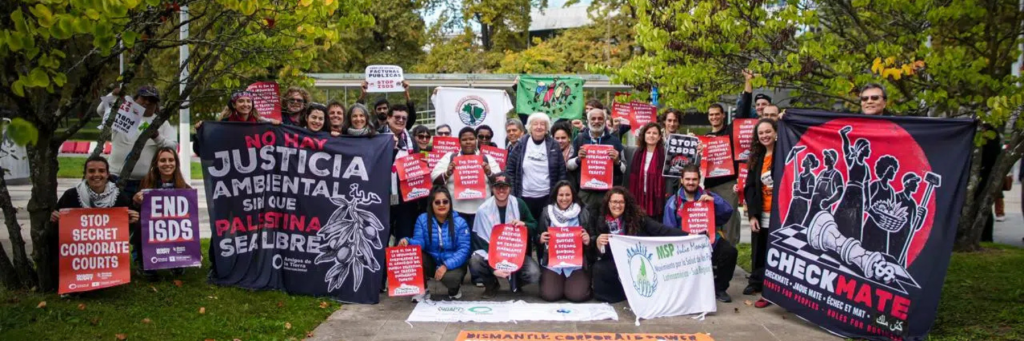
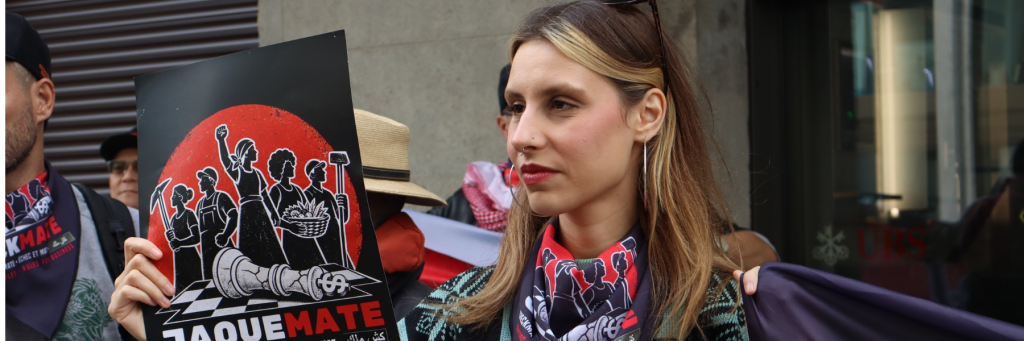
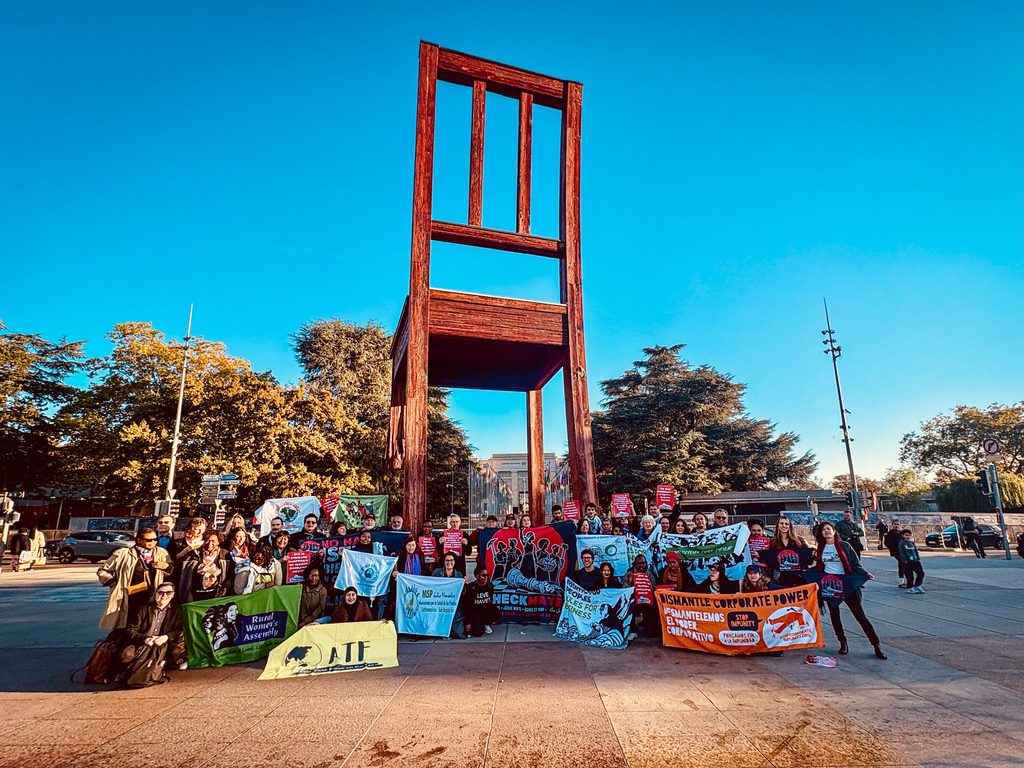
Every time I walk into the United Nations building in Geneva, I feel slightly out of place. I find myself wondering what I am doing there, sitting in a room full of diplomats, technical jargon, and lengthy negotiations about transnational corporations and human rights. And yet, amid all that formality, my roots remain my compass.
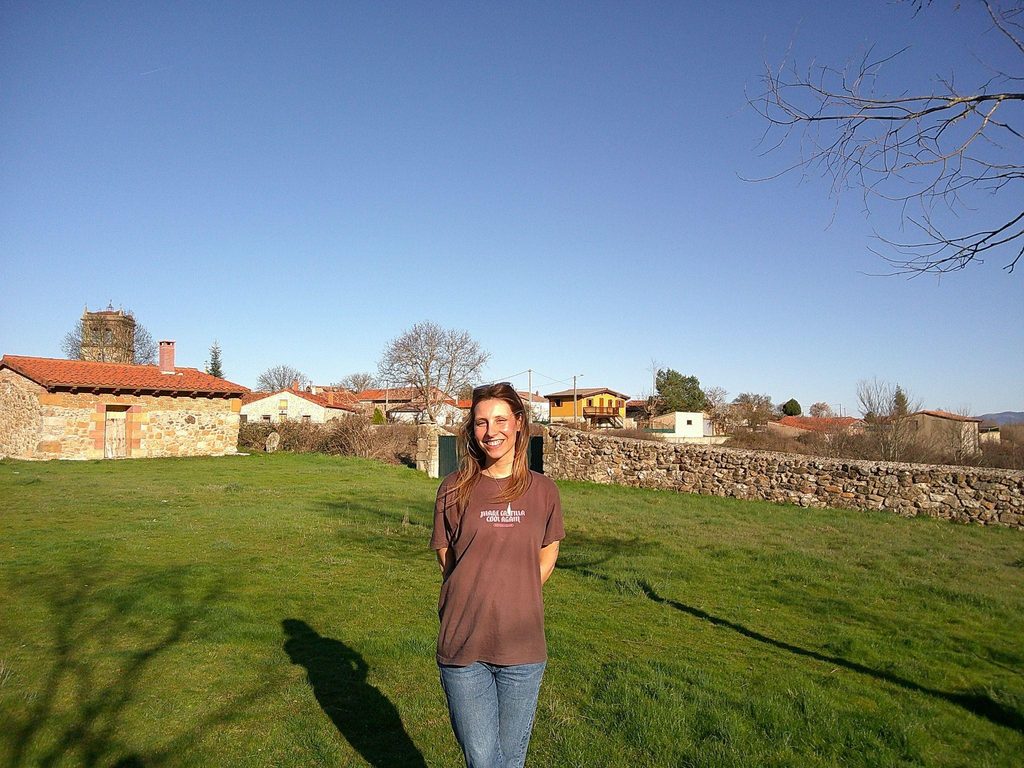
I think about my villages in Spain: Barbadillo del Mercado and Mahamud. I think about the stories I heard growing up. About the way so many people in rural communities understand life: caring for the land and the commons, helping neighbours, and knowing that no one gets ahead alone. Although I was born in Madrid, much of who I am was shaped far from the city, and those small lessons taught me far more about social justice than any institution ever could.
Two years ago, I moved to Brussels to help advance an international treaty that would place human rights above economic interests. The more I work on it, the more I realise that my understanding of justice was formed long before I arrived here.
I notice it when I speak with Pierre Marion, a French farmer who has spent years fighting to ensure that rural communities have a future in the face of expanding industrial agriculture. And then I remember my grandfather Jesús, from Mahamud, who worked the land all his life, and my family harvesting grapes to make homemade wine.
I also listen to communities from Ecuador, Argentina, Colombia, South Africa and the Philippines as they speak out against the way large corporations devastate entire territories in their pursuit of natural resources.
“In the Amazon, they have plundered the land, poisoned the rivers, and displaced the people who lived there,” my colleagues tell representatives from countries around the world.
And my thoughts drift back to Barbadillo del Mercado. To the empty houses scattered across so many villages in Castile. To the generations who were forced to leave in search of a decent future.
For those who stayed behind, all too often there was only institutional neglect. Yet resistance, like the land itself, continues to grow.
The people of Villangómez -a small village in the north of Spain- are proving exactly that. They are standing up against a massive biomethane plant that would effectively turn their village into an industrial dumping ground. They know that rural life is worth more than any business venture. So too do the young people of the northern Spanish city Burgos who are organising to raise awareness about environmental issues across the province and make it clear that their communities will not become sacrifice zones.
The contexts are very different. The Spanish region Castile is not the same as territories that have been historically colonised and exploited by powerful economic interests. But despite those differences, I always find something in common: the struggle of ordinary working class people against those who turn life, land, and the future of others into commodities.
That is something I learned from my grandmother Antonia. One day she told me, “What doesn’t seem right to me is that the rich have so much while the poor have so few opportunities.” Since then, I have tried to carry those words with me wherever I go.
Our roots are humble and hardworking. Our grandparents spent their lives caring for their communities and later caring for us. Because of their efforts, many of us have opportunities they could never have imagined for themselves.
That is why I try never to let privilege cloud my empathy. Powerful economic actors see villages, nature, and even the air we breathe as business opportunities.
We see, in our grandmother’s house, the traces of those who came before us: the iron ring where a donkey was once tethered, the neighbour’s chickens wandering among blooming geraniums, doors left open during the summer, a stranger asking, “Whose family are you from?” and the stone column in the village square where we spent endless summers with our friends.
We see something else. We see memory.
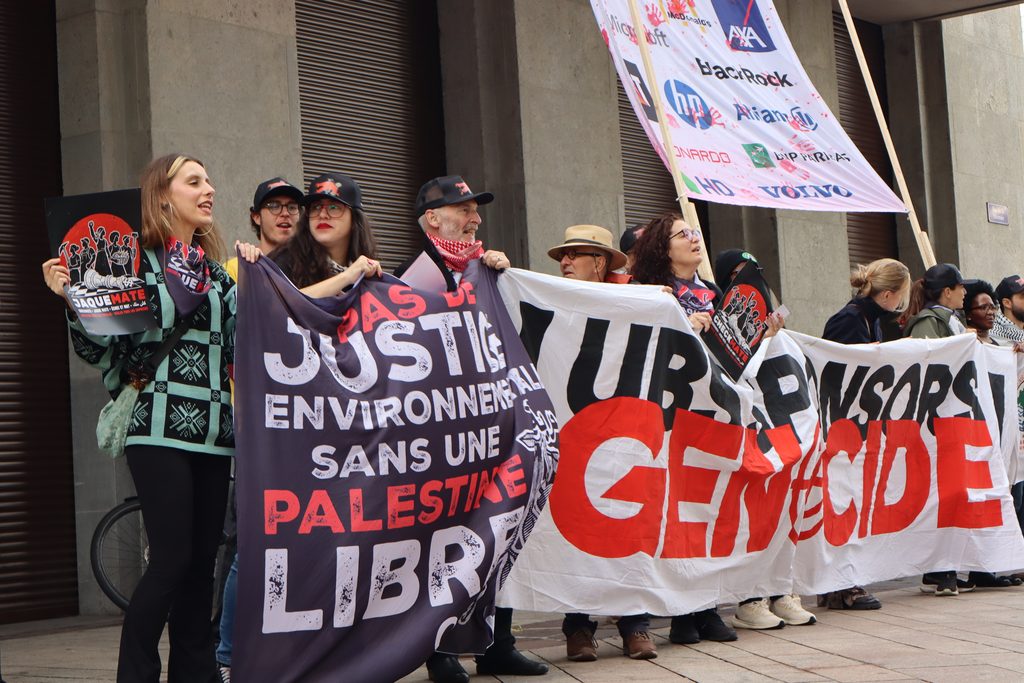
And it is there that I understand that the dignity of communities looks remarkably similar wherever you go in the world.
I see it in Pablo Fajardo, an Ecuadorian lawyer who grew up in the Amazon and studied law to defend his community against oil companies. I see it in Rudi Kennes, a Belgian worker and trade unionist who was forced to start working at the age of fifteen, like so many young people exploited by the same corporations we continue to challenge today. And I see it in Rima Hassan, a Palestinian Member of the European Parliament who, from exile, tirelessly speaks out against the genocide of her people.
But that dignity is also much closer to home.
I find it in my lifelong friends from the village, navigating the hardships of our own times. My friend Aitana, protecting the biodiversity of Burgos province. My friend Bea, bringing feminism into every corner of public education. And in my friend María, embodying the kindness, solidarity, and sense of community that are so characteristic of rural life.
And then I realise that everything is far more connected than it first appears.
The way my grandmother understood injustice was not so different from the people around the world who continue to stand up to power in defence of life itself.
My roots, and the lessons passed down to me by my mother and grandmother, are what carried me from Barbadillo del Mercado to the United Nations. Challenging power was never something I learned in an office. I learned it through the humility and dignity of the women who raised me.
Perhaps that is why, even in a United Nations conference room, I still feel much closer to the village square than to those who look down on the world from above.