
And it is more sinister than you think.
Decision-makers in Europe are pushing for a sweeping overhaul of pesticide rules that would dramatically weaken protections for people and the environment – including bees. They are currently debating a proposal that was published on December 16th 2025, and would dismantle the system that keeps these harmful chemicals out of our food, water, and ecosystems. These changes are part of a broader effort to bow down to the demands of big agribusiness, prioritising short-term profits over public health and environmental safety.
What’s in the works?
The European Union is planning no less than lifetime approval for pesticides. That means no more mandatory regular re-evaluations! Many pesticides would no longer need to be reassessed every 10 to 15 years to take into account new scientific studies on their safety, and they could remain approved indefinitely.
The new rules would also limit EU member states’ ability to act on new evidence. Even when studies reveal serious health or environmental risks, national authorities could not take action without first requesting a Commission-led reassessment. This would effectively prevent member countries from incorporating new peer-reviewed studies or other evidence. Under such a system, Denmark, for example, might not have been able to ban PFAS pesticides, as it did recently.
These changes are a big attack on Europe’s chemical safeguards at a time when science, public concern, and the health and biodiversity crises call for stronger, not weaker, protections.
What does it mean for our health, bee health, and the environment?
Regular re-evaluations of pesticides are the only times when chemical companies are required to fully update safety information, take new scientific evidence into account, and prove that their products still comply with EU standards. If these reviews were removed, it would have wide-ranging and serious consequences!
Dangerous pesticides are left unchecked
Many pesticides may seem safe during initial testing, but later turn out to harm people and the environment. The EU’s system for re-evaluating pesticides has repeatedly uncovered serious harms years after a pesticide was first approved. Without these reviews, dangerous chemicals could stay on the market indefinitely.
Ecosystem collapse
Pesticides are infiltrate our natural ecosystems where they cause irreparable damage. Bees are the best example of showing the impact that these chemicals have on biodiversity and animal as well as human health.
Bees are natural farmers. They feed us and they prop up entire ecosystems. But they are taking down in great numbers by their mortal enemy: pesticides
Beyond immediate death, these chemicals impair bees’ navigation, reproduction, disease resistance, and foraging—effects current risk assessments often overlook, especially when bees are exposed to mixtures of pesticides.
Allowing pesticides to remain approved indefinitely could mean that new evidence of harm to bees takes longer to get notice or to trigger action, delaying the restriction or phase-out of substances that threaten pollinators and biodiversity.
Bees are essential to the food we eat. One-third of our diet depends on their pollination—fruits, vegetables, nuts. Pesticides are crippling colonies, slashing crop yields and driving up prices while eroding biodiversity. The result? A fragile system where chemical dependence threatens the very foundation of our food supply.
Impact on farmers
Farmers and farm workers are often the first victims of pesticide use, with many developing cancers, neurological diseases like Parkinson’s, and other serious health problems linked to chemical exposure. Even when they use protective equipment, studies show they remain at risk.
It’s not only farmers who are affected: families and neighbours are exposed to drifting chemicals, making pesticide use a wider community health issue. While the dangers of pesticides remain a taboo, those at the front-line of pesticide exposure, including farmers themselves, are increasingly speaking out.
Every year that toxic pesticides remain on the market unchecked is another year in which farmers, farm workers, their families, and communities are exposed to preventable health risks.
Muddy waters
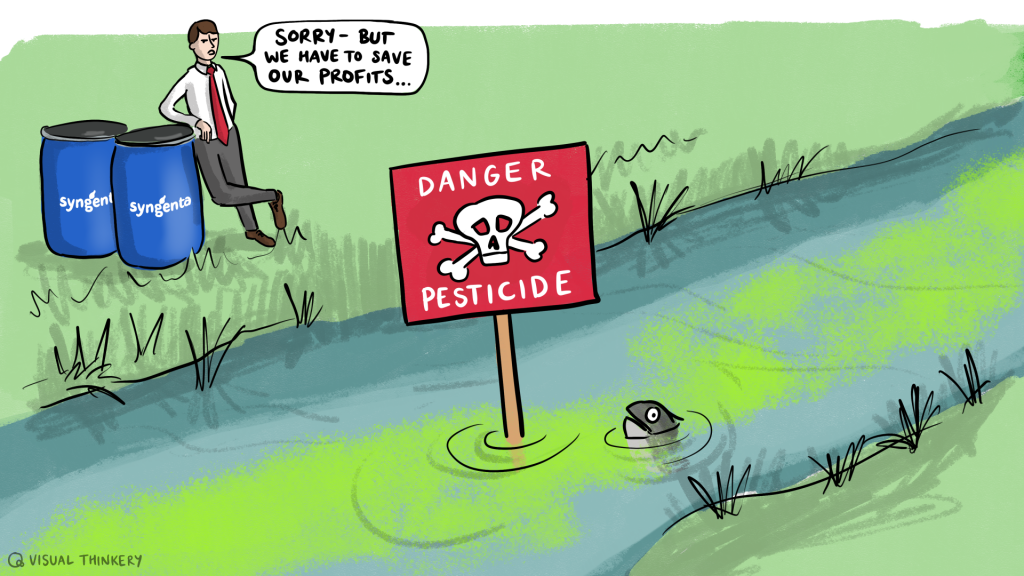
Pesticides are widespread in European water. Surveys show that 22% of rivers and lakes have levels above safety thresholds, and studies in countries like the Netherlands, Denmark, and Ireland found pesticides in drinking water exceeding safety limits. While this clearly calls for stronger safeguards to protect our water and environment, the Commission is instead proposing to weaken existing protections.
A race to the bottom
If older pesticides are no longer required to undergo mandatory re-evaluation, keeping them on the market becomes cheaper than developing safer alternatives. Rather than promoting safer innovations or encouraging farmers to work with nature to manage pests, weeds, and plant diseases, the proposal risks trapping them in continued reliance on harmful chemical products.
The harms of pesticides are well known: they wipe out pollinators like bees and butterflies, which are essential for our food; they contribute to rising chronic diseases such as cancer and Parkinson’s; and farmers and rural communities face the highest exposure and greatest health risks.
If the worrying proposal in the pipeline goes ahead, it will be a slap in the face to the more than 1.1 million citizens across Europe who called on the EU to end pesticide use. They expect the EU to protect their health, not prioritize industry profits over their safety.
There is still time to act! The European Parliament will soon decide whether these dangerous changes move can forward. Let them know you don’t want pesticides authorised for life. Let them know you support real protection of our health, bees, and environment —> contact your local decisionmaker here.
For more information on the toxic impacts of the EU Commission’s proposal, check out our full Q&A.