
The European Commission today presented its Strategy for the Future of Livestock. When mounting challenges in agriculture demand a transition towards a more resilient, small-scale farming that cares both for people and nature, the strategy instead prioritises further industrialisation combined with greenwashed promises (including the permission of genetically-modified animals, the expansion of biogas and biomethane projects and RENURE).
By labelling livestock as a ‘key strategic sector for the Union competitiveness and open strategic autonomy’, the European Commission could make it easier for industrial-scale projects to get derogations from EU environmental laws such as the Nitrates Directive, Water Framework Directive, Industrial Emissions Directive and Habitats Directive. Friends of the Earth Europe, working closely with the Stop Factory Farming Europe coalition (1), warns that this approach risks fast-tracking permitting and weakening compliance with legislation meant to protect the climate, the environment and (drinking) water from pollution, while harming small-scale farmers, local communities and nature.
Despite the ever growing damage caused by industrial animal production – including water pollution, poor animal welfare, and devastating impacts of industrial food production dominating rural communities – the Commission also downplays the drivers of factory farming, and the sector’s major health, social and environmental impacts.
Merche Álvarez, who lives next to the As Conchas water reservoir (Spain), polluted by factory farming, testified (2):
“All my childhood memories are linked to the reservoir. It was a natural paradise. I can’t figure out my life without it. My children learnt how to swim here. All our lives go around the reservoir. But now since it was polluted more than a decade ago, we can’t live here, we can’t open the windows, we are always afraid of breathing because of the risk for our health. But we are not leaving
Our authorities failed to take action against industrial livestock pollution, but they are the ones which should protect us. So we took them to court and we won. We will not stop fighting until our rights are fully restored.”
Felix, neighbour to an industrial poultry operation in Vaugeton, Nouvelle-Aquitaine (France), said (3):
“Noise has become our main problem. The fans run day and night. We hear a constant humming noise, 24 hours a day, which intensifies in the evening and during hot spells. It never stops.
We are not opposed to farming. On the contrary. We would have preferred a farm on a human scale, one that fosters links with the local area, respects both animals and residents, with free-range hens and local production.
Our experience shows that factory farms have very real consequences for people living nearby. Behind the figures and administrative approvals, there are families, residents and villages who suffer the long-term effects of these projects.”
Mathieu, dairy farmer in Vendée, France, for more than 15 years added:
“Every year, we face growing challenges: climate change, volatile prices, increasing production costs and difficulties in securing a fair income for farmers. At the same time, the ongoing industrialisation of livestock farming is accelerating the disappearance of small and medium-sized farms, concentrating production in fewer hands and making it increasingly difficult for young people to enter the profession.”
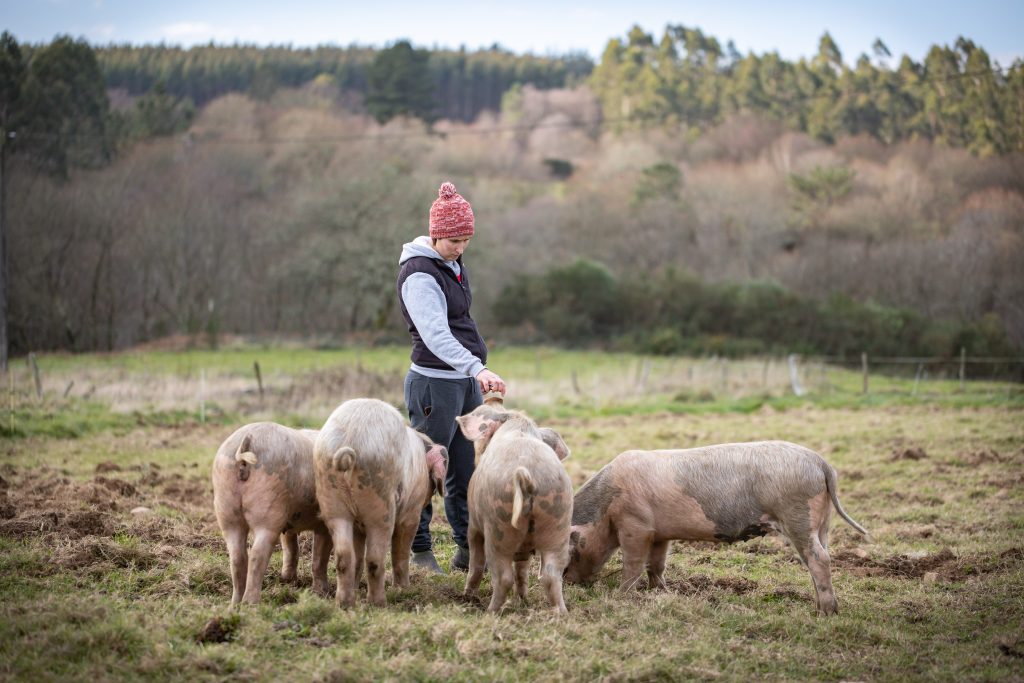
The EU Livestock Strategy must support farmers who work with nature, strengthen local food autonomy, reward environmental and social benefits, and ensure that livestock production remains rooted in territories. Europe needs more livestock farmers, not animal factories!”
Notes
(1) Stop Factory Farming Europe is a coalition of concerned citizens, local groups and movements living in rural areas across Europe impacted by the damaging effects of animal factories or ‘factory farms’, supported by civil society organisations like Friends of the Earth Europe in their fight against the industrialisation of animal farming.
(2) For more than a decade, the As Conchas reservoir and surrounding environment have been polluted by hundreds of industrial livestock farms, while authorities failed to take action. The water contains cyanobacterias, nitrates and antibiotic-resistant bacterias which could cause cancer and other serious health problems. As a result, Amigas de la Tierra / Friends of the Earth Spain, CECU and ClientEarth have been supporting the neighbours in taking authorities to the court. One year ago, civil society won the case. For the first time a court ruled that authorities must protect human rights from the impacts of industrial livestock pollution. However, a year has now passed, and they haven’t begun implementing the measures needed to clean up the reservoir. Organisations and local residents continue fighting until they citizens’ rights are fully restored.
(3) In 2024, people from the hamlet of Vaugeton, in Celle-Lévescault, in the Vienne department (86) learnt that an industrial farm housing 150,000 laying hens was to be set up in the former goat farm situated right next to their homes. Over the years, the region has become a testing ground and launchpad for strategies to industrialise agriculture, particularly in the livestock sector. The impacts of industrialisation are particularly severe: soil, water and air pollution; the loss of biodiversity; a major contribution to climate change; and risks to our health. Rural depopulation has disrupted the social fabric and caused environmental damage.