
Originally posted by the Global Campaign to Reclaim Peoples’ Sovereignty, Dismantle Corporate Power and Stop Impunity.
The 11th session of negotiations for a UN Binding Treaty to hold transnational corporations accountable for their human rights violations are underway in Geneva, Switzerland.
Affected communities are the heart of the Binding Treaty and Friends of the Earth International alongside the Global Campaign to Reclaim Peoples’ Sovereignty, Dismantle Corporate Power and Stop Impunity, is determined to ensure the text reflects this reality. As transnational corporations that violate human rights remain represented within the negotiations by the corporate lobby and backed by some countries of the Global North, civil society is committed to holding the line and securing justice for those on the frontlines of corporate impunity.
“Transnational corporations rip through our communities, our lands and the environment for profit. They violate our fundamental human rights with impunity and we’re left without access to justice. We need a Binding Treaty because the situation is dire. Because our soil is still flooded with oil after Chevron dumped it in the Amazon, people are still sick and water is still undrinkable.”
Pablo Fajardo
UDAPT / Friends of the Earth Ecuador
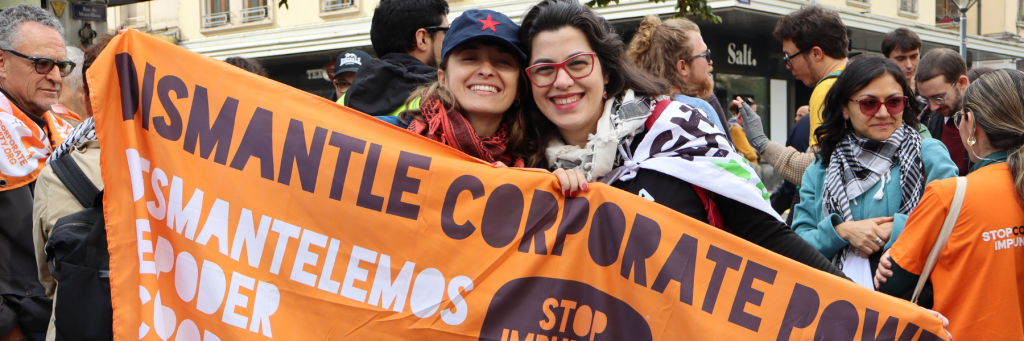
Negotiations began on a strong note following mass mobilisations in Geneva organised by the Global Campaign and Swiss allies. Activists, affected communities and movements gathered to demand an end to corporate complicity in the genocide in Gaza. The Binding Treaty was recognised as a key tool to end corporate complicity and impunity during the demonstration, essential to ensuring affected communities have access to justice and redress.
“From Bangladesh to Palestine, from Mozambique to Serbia, transnational corporations are recklessly violating peoples’ rights and destroying nature. The systems that are accelerating climate breakdown are the same that propel the continued occupation and genocide in Palestine. The power and impunity of TNCs need to be reigned in and they need to be held accountable.”
Dipti Bhatnagar
Justiça Ambiental (JA!) / Friends of the Earth Mozambique
Upholding a global architecture that secures the impunity of transnational corporations were the corporate lobbies who made their presence known on the first day of negotiations.
“Corporate lobbies in the room (like the International Organisation of Employers, or the International Chamber of Commerce) are committed to watering down the treaty. On day one they were already demanding that the Chair block specific corporations from being named in the negotiations. They exist only to serve the interests of corporations so what place do they have in a process that is meant to be centred on human rights? Their presence here is nothing but an absolute conflict of interest.”
Roula Mamlouk
Friends of the Earth France
With multilateralism at risk, Friends of the Earth International looks to the upcoming COP30 and Peoples’ Summit to continue calling attention to the role of transnational corporations in today’s polycrisis.
“Transnational corporations are key drivers of today’s climate and ecological crises. From fossil fuel giants to agribusiness, mining, finance and tech, they’ve built vast profits by exploiting people and planet. The climate crisis, which they have fueled and profited from for decades, has already resulted in millions of deaths, mass displacement, hunger, disease, conflict and the accelerated destruction of ecosystems worldwide. This is a human rights issue and it needs to be reflected in the Binding Treaty.”
Letícia Paranhos
Friends of the Earth International